Profile

The person
behind the projects

Freelance developer based in Manfredonia, Italy. I work from here, but clients come from anywhere there’s internet — as far as Budapest, so far. Here’s where I come from, how I work and what I’m building right now.

I started with hardware

Origins

The first things I took apart were iPhones — the 5C, the 5S, a few models in between. I was fascinated that a pile of parts, put together, could run an entire operating system. I wanted to understand them one by one.

From phones I moved on to Macs: motherboards, power supplies, heatsinks, connectors. Hardware is my natural ground — I’ve had my hands in it since I was a kid.

Software took me longer. I wrote my first lines at school, on the projects the teacher set; then I kept going on my own, and now it is the part I am furthest ahead in.

I want to thank my computer science teacher at ITIS, Luigi Olivieri. He gave me the foundations when I really needed them.

Clients and personal projects

What I’ve done

A bit of everything: AR and VR installations from the US in Green Bay to Budapest, mobile apps for the stores, IoT devices, e-commerce, visual identities for small businesses. Alongside client work I’ve always kept a personal project open: it lets me study new things, choosing myself what to learn and when.

Work & clients →   Personal projects →

Tools I use

The stack

The languages I use most are Python, JavaScript, C/C++ and Swift. For 3D and AR, Unity. In practice, though, I learn whatever the project needs — whether it has to talk to a board or to a browser.

PythonJavaScriptC / C++SwiftUnity

All skills →

Hardware I work with

My setup

What I need to work well: MacBook and 3D printer to develop and print prototypes, iPad to sketch before writing code, iPhone and Apple Watch to test apps where they’ll actually be used, Vision Pro and Ray-Ban Meta for AR and mixed reality, AirPods for calls.

How I approach a project

Method

I don’t follow a rigid method: every project has its own quirks, and you usually only find them once you’re inside it. Two things, though, I always do.

  • Before writing a line of code I try to really understand the problem. Clients often know what they want, but not always why — and understanding that why changes a great deal about what actually needs building.
  • Then I show something running as early as possible, even if rough. An ugly but living version in a week is worth more than a perfect spec on paper: if it isn’t what you had in mind, we find out right away, not three weeks later.

On timing and prices I’m straightforward. If I slow down, I tell you. If the estimate was wrong, I tell you then, not at the end of the project. And when I say it’s ready, it means genuinely ready: tested, in production, with instructions for using it.

Several things in parallel

What I’m building

Right now I have several projects open at once, some with clients and some entirely my own: from accessibility to applied AI, from wearables to tools for people who work at a computer all day. For now I’d rather not name names: when something comes out into the open, you’ll find it under Work.

The underlying idea is a single one: stop billing by the hour and start building things that keep generating value even when I’m not working on them.

My principles

Things I care about

  • No tricks to cheat users. I don’t build things designed to squeeze conversions at any cost: if a client asks for that, I say no.
  • I respect the time of the people I work with. Meetings short and only when genuinely needed; everything else by message or email.
  • I keep the code clean even when the client never sees it. It looks like it costs a bit more, but it pays off every time someone goes back into it.

The versions of this site

History

Each version is a snapshot of where I was technically when I wrote it. I keep the old ones online too: it helps me see how far I’ve come.

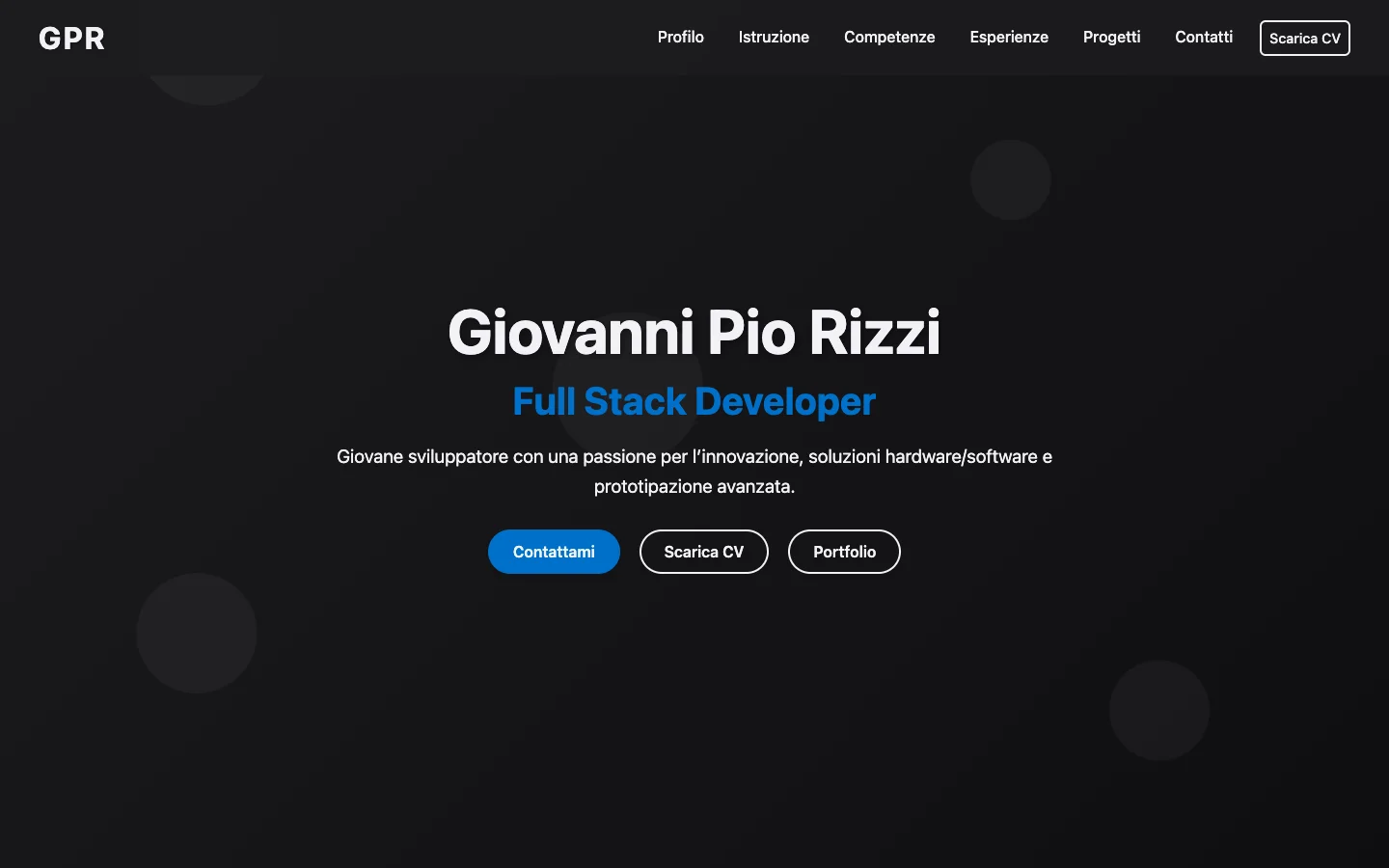
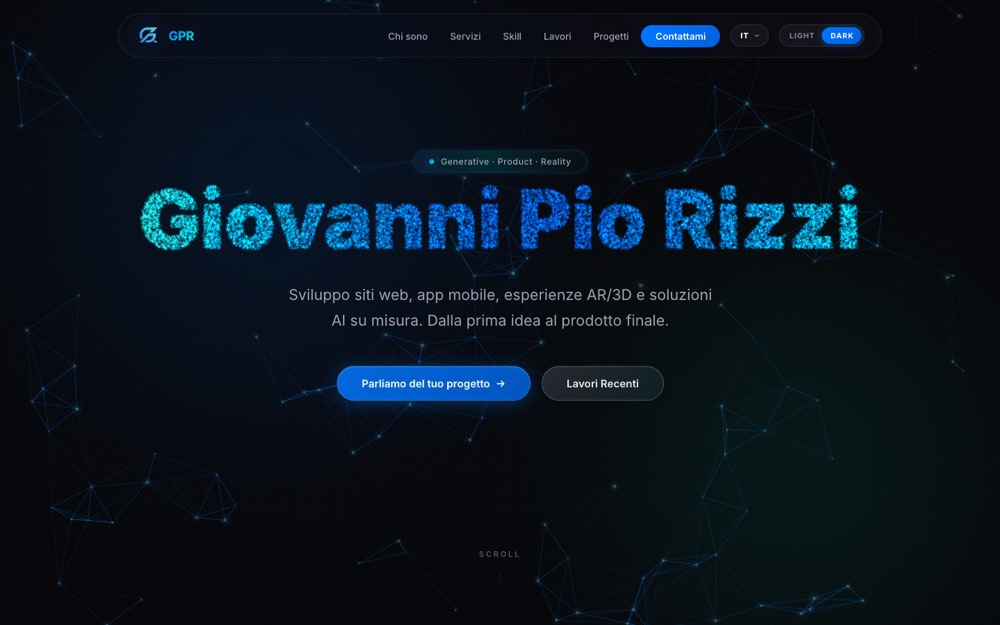
  • V1 — May 2025. Hand-written HTML and CSS, a single page. Thrown together in a couple of evenings when I needed something to send to my first contacts.
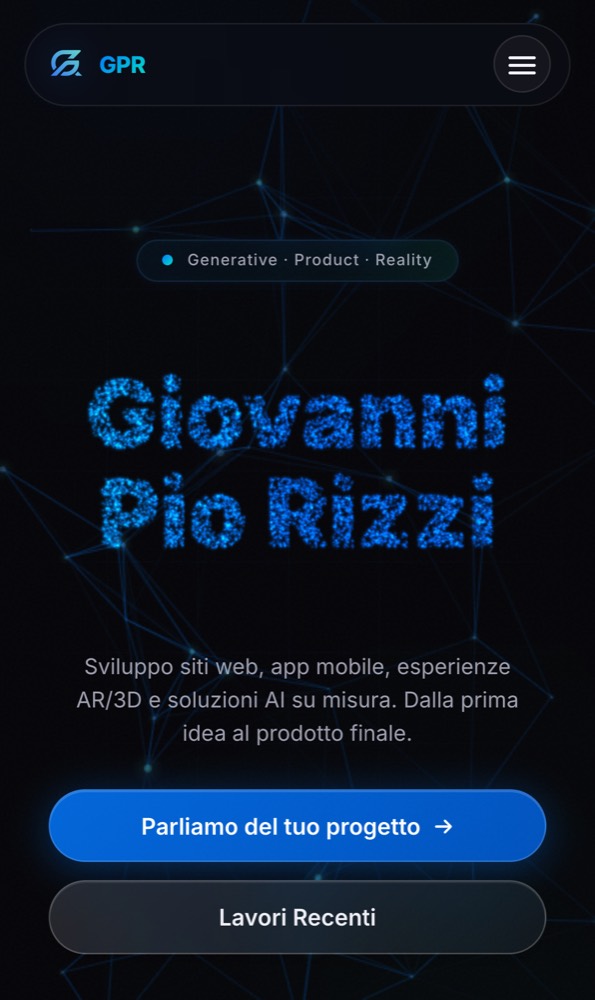
  • V2 — July 2025. Complete rewrite: animations, glass effect, video previews. More polished, but still all in one two-thousand-line file.
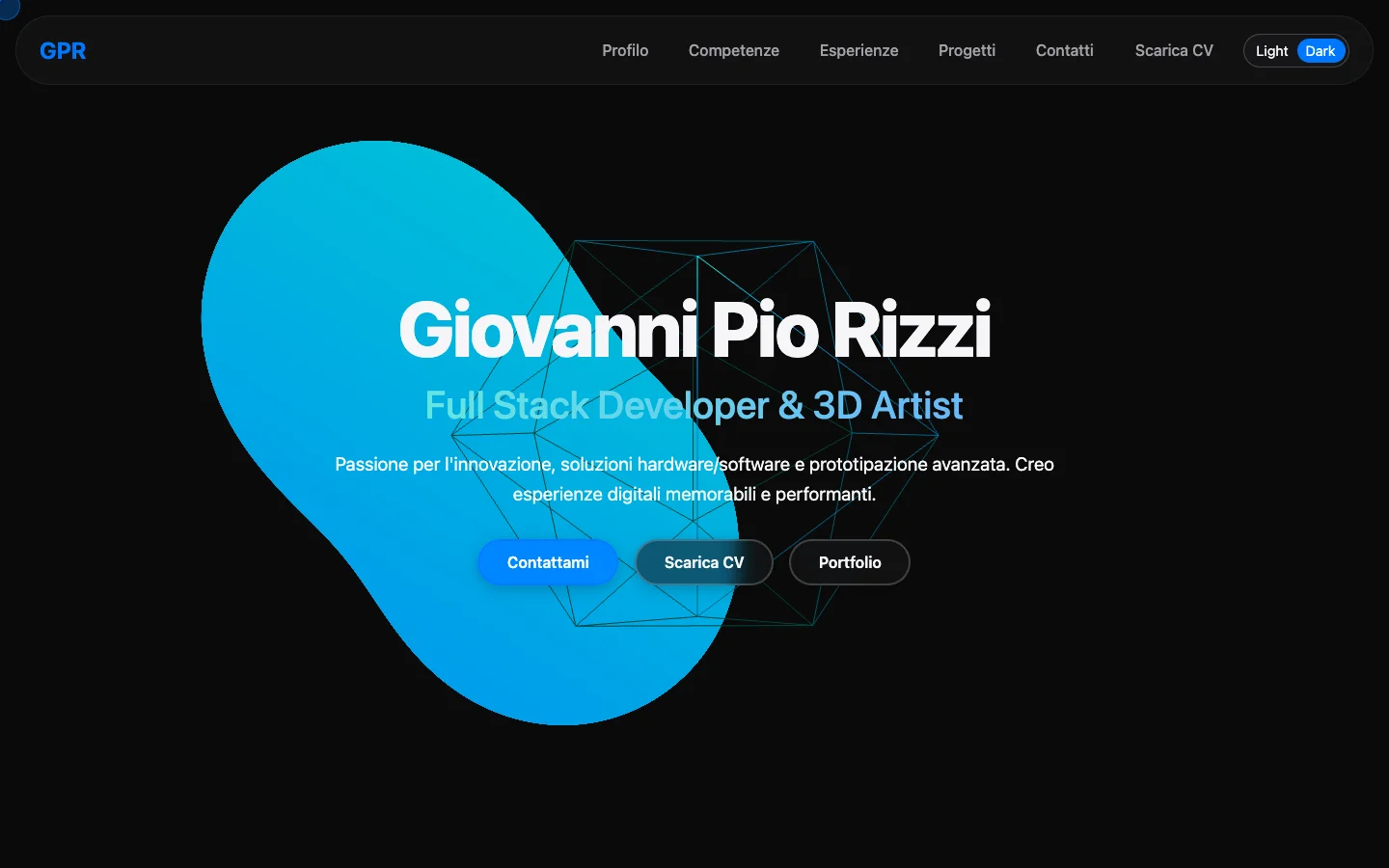
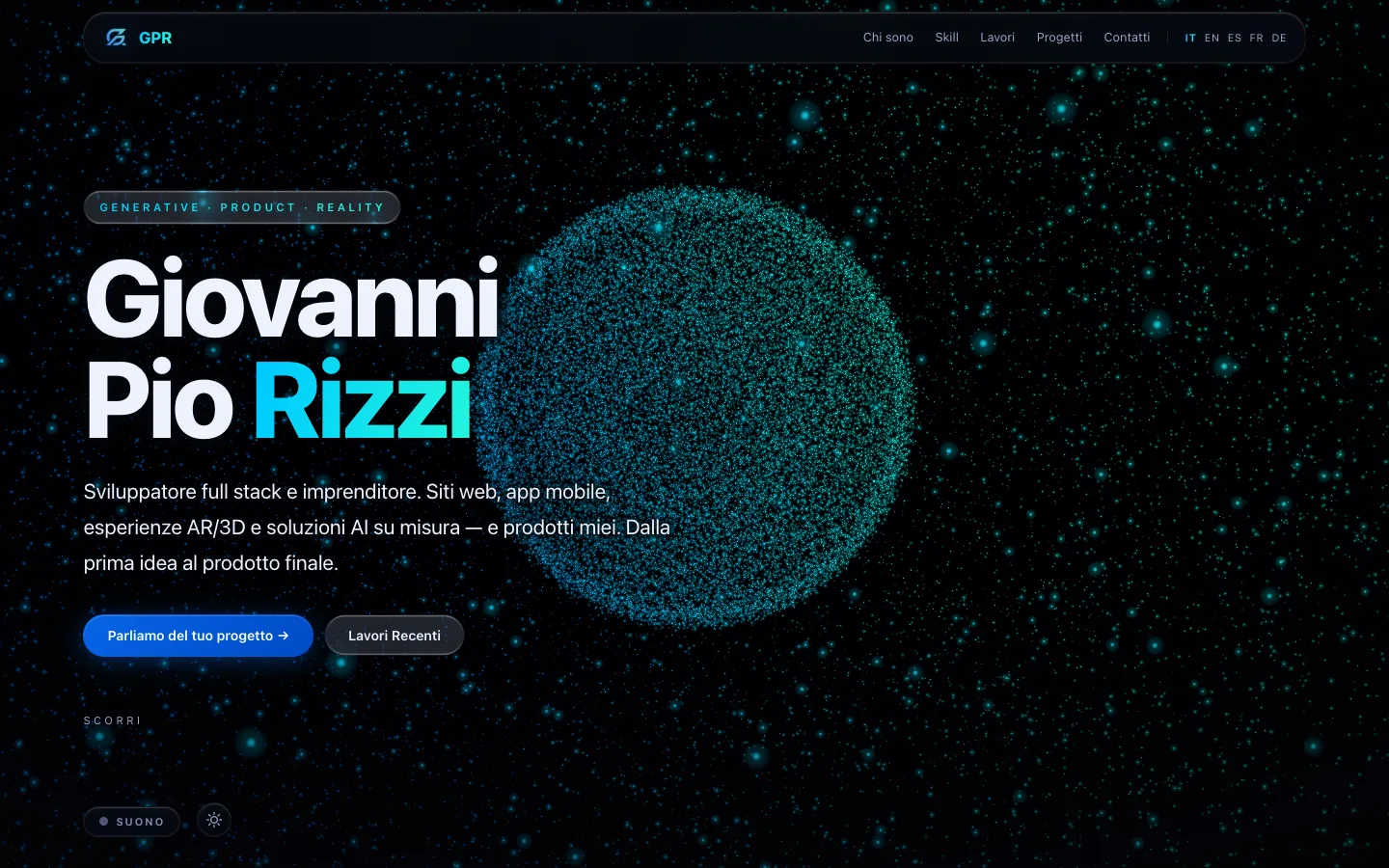
  • V3 — May 2026. A 3D cylinder of projects, interactive particles generated on the fly, light and dark themes, five languages.
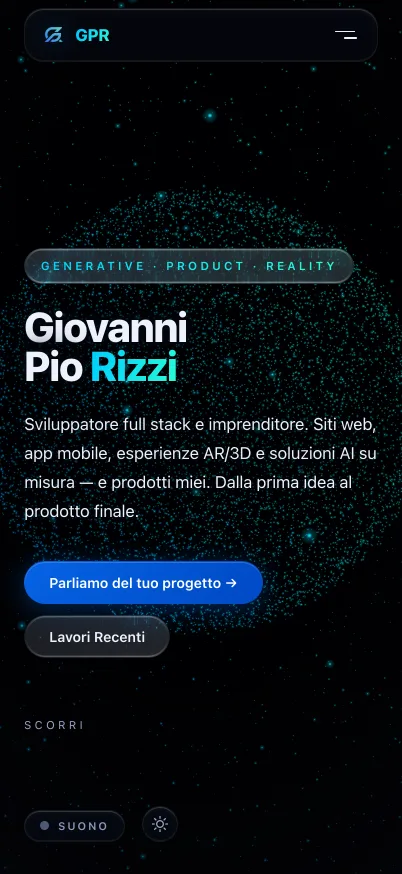
  • V4 — 2026. GSAP, 3D models, five languages and a direction of animations for every section. It is the one still online.
  • V5 — the one you’re looking at. A single graphics engine for the whole scene, glass drawn by hand rather than by the browser, and scrolling handled by the site so that content and glass cannot come apart.
Preview V1
V1 mag 2025
Preview V2
V2 lug 2025
Preview V3
V3 mag 2026
Preview V4
V4 2026